
Typical age
Often addressed in the teen years
Procedure time
Usually 1-2 hours
Hospital stay
Typically a few days
Back to play
Sports after several weeks to months
Signs & symptoms

What families usually notice

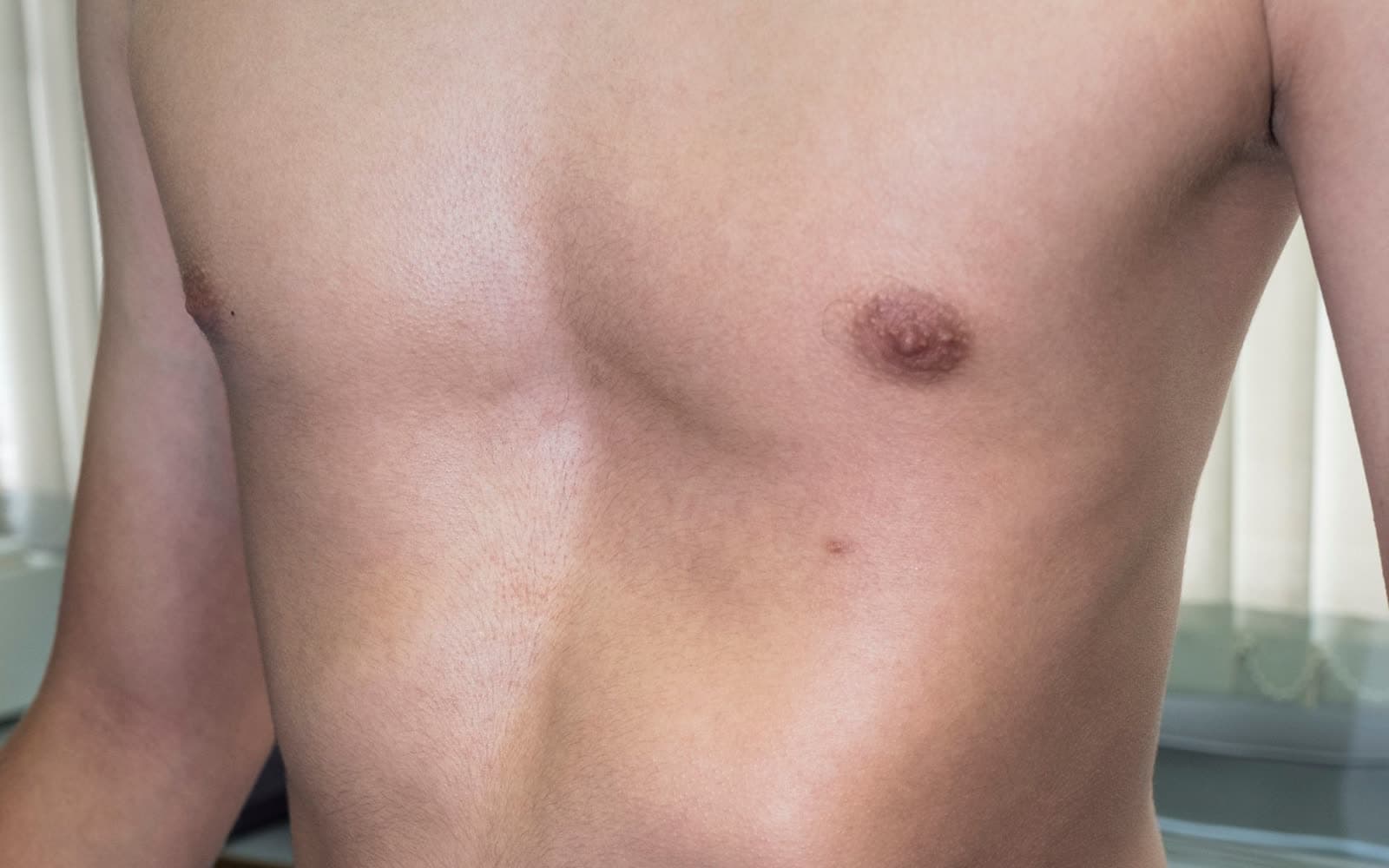
  • A visible dip in the chest

    The center of the chest appears sunken, sometimes more on one side than the other.

  • Getting winded easily

    Some teens tire faster than friends during exercise or feel short of breath.

  • Chest discomfort

    Aching in the chest or ribs, especially with activity, is a common complaint.

  • Racing heart

    A deeper dip can press gently on the heart and cause palpitations in some children.

  • Self-consciousness

    Many teens avoid swimming or changing in front of others. This matters, and we take it seriously.

When to call, and when to go straight in

Pectus excavatum is rarely an emergency. Call our office to arrange an evaluation if you notice the chest shape changing, or if your child has new tiredness or chest discomfort with activity. If your child ever has severe chest pain, fainting, or real trouble breathing, go to the emergency room or call 911.

Talk it through

Discuss this with Dr. Frykman

Request an appointment and a member of the team will call you back. Urgent concerns are triaged the same day wherever possible.

How we treat it

Dr. Frykman's approach

  1. Thorough, unhurried evaluation

    We measure the depth of the dip with imaging and, when helpful, check heart and lung function to understand the full picture.

  2. Minimally invasive repair (Nuss)

    For children who benefit from surgery, I typically use the Nuss procedure, which places a curved bar behind the breastbone through small side incisions to lift the chest.

  3. Non-surgical options when appropriate

    For milder cases, simply monitoring growth may be all that is needed.

  4. Serious about comfort

    For pain control after the Nuss procedure, we perform the latest version of intercostal nerve cryoablation combined with multimodal medications with our anesthesia team.

What to expect

Before, during and after

  1. Before

    Imaging, testing, and a shared decision

    We review scans and results together and talk honestly about whether surgery or watchful waiting fits your child best.

  2. Day of surgery

    Small incisions, immediate lift

    Under general anesthesia, one or more bars are placed through small incisions on the sides of the chest. The change in chest shape is visible right away.

  3. Recovery

    A few days in hospital, then steady progress

    Your child walks the day after surgery and goes home once pain is well controlled, typically 1-2 days after surgery. The bar typically stays in place for two to three years before a short procedure removes it.

Recovery

Getting back to being a kid

  • Walking early and often helps the chest and lungs recover.

  • Posture matters: no slouching, twisting, or rolling onto the side for the first weeks.

  • School usually resumes in about a week.

  • Contact sports wait until we clear them, often around three months.

  • Regular check-ins track healing and plan for bar removal.

Dr. Philip K. Frykman

Dr. Philip K. Frykman

Board-certified pediatric surgeon

I want your teenager to feel confident in their body, and we will choose the path that gets there safely.
Questions

What parents ask us

  • No. Many children have mild pectus that needs no treatment. We only recommend surgery when it is likely to improve breathing, comfort, or wellbeing.

  • Repair is often done in the early to mid teens, when the chest is still flexible but growth is nearly complete.

  • The bar sits under the muscle and is usually not visible, though it can sometimes be felt.

  • Yes. After two to three years it is removed in a short outpatient procedure.

From the blog

Related reading

All articles
  • A child with a chest wall deformity in Conejo ValleyChest & Airway

    5 min read

    Understanding Pediatric Chest Wall Deformities

    If your child has a sunken chest (pectus excavatum) or a protruding chest (pectus carinatum), you are not alone. These are among the most common chest wall differences seen in children and adolescents. Most are mild, yet some cause exercise intolerance, chest pain, or self consciousness that affects daily life. Families often ask when to…

    Read article

  • A child with a pectus excavatum. Rickets is a consequence of vitamin D deficiency.Chest & Airway

    4 min read

    Pediatric Chest Wall Deformities: When to Seek Surgery

    For many families, learning that their child has a chest wall deformity such as pectus excavatum or pectus carinatum is an emotional moment that leads to pressing questions about health, appearance, and the future. You may wonder whether your child needs surgery, what the right timing is, and how the journey will unfold. Understanding these…

    Read article
  • pectus excavatum surgery in Thousand Oaks, CaliforniaChest & Airway

    5 min read

    A Comprehensive Guide to Pectus Excavatum Surgery

    Located in Thousand Oaks, California, Pacific Coast Pediatric Surgery is renowned for its expertise in treating pectus excavatum. This congenital condition involves a sunken breastbone, affecting both physical and emotional well-being. Understanding the surgical options for correcting this condition can help families make informed decisions about their child’s health. This article provides a detailed look…

    Read article